Korean vs Overseas Breast Revision Surgery: Which Is Better?
Korean vs Overseas Breast Revision Surgery: Which Is Better?
Breast revision surgery is one of the most technically demanding areas of aesthetic surgery, and choosing the right country can significantly affect both safety and results. Korea—especially Seoul—and overseas destinations such as the United States, Thailand, or Europe each offer different strengths. The “better” option depends on surgical complexity, desired aesthetics, budget, and access to follow-up care. In Korea, revision breast surgery is particularly known for its focus on natural contour refinement and high case volume of complex corrections.
Surgical Philosophy: Natural vs Structural Emphasis
Different regions often approach breast revision with slightly different aesthetic priorities.
Korea:
- Strong focus on natural proportions
- Emphasis on subtle, refined outcomes
- Preference for soft, anatomical shaping
- Careful correction of minor asymmetries
Overseas (varies by country):
- More diverse aesthetic standards
- Some regions favor fuller or more augmented results
- Greater variation in surgical style depending on surgeon
Korea is often associated with “natural-looking correction.”
Surgeon Experience in Revision Cases
Revision surgery experience is one of the most important success factors.
Korea:
- High volume of revision and secondary cases
- Frequent correction of complex implant issues
- Strong specialization in pocket reconstruction and asymmetry repair
- Surgeons often handle cosmetic refinement daily
Overseas:
- High-quality surgeons exist, but revision volume varies widely
- Some clinics focus more on primary augmentation
- Expertise depends heavily on individual surgeon selection
Experience consistency is often cited as a strength in Korea.
Complexity of Revision Techniques
Breast revision often requires advanced structural correction.
Korea commonly offers:
- Capsular contracture release and reconstruction
- Symmastia repair and medial pocket control
- Implant repositioning for fine symmetry
- Combination procedures (lift + implant + fat grafting)
Overseas:
- Similar techniques are available in major centers
- Approach may differ based on surgeon training background
- Less standardized refinement in some clinics
Both regions can perform complex revisions, but consistency differs.
Aesthetic Outcomes and Naturalness
Outcome style is a major differentiator for many patients.
Korea:
- Strong preference for natural slope and soft contour
- Less emphasis on exaggerated upper fullness
- Focus on harmony with body proportions
- Detailed attention to symmetry and cleavage balance
Overseas:
- Results vary widely by surgeon and patient preference
- Some regions favor fuller, more pronounced augmentation
- Less uniform aesthetic standard across clinics
Korea is often preferred for subtle, natural refinement.
Cost Comparison
Cost is an important factor, especially for revision surgery.
Korea:
- Moderate to high pricing depending on complexity
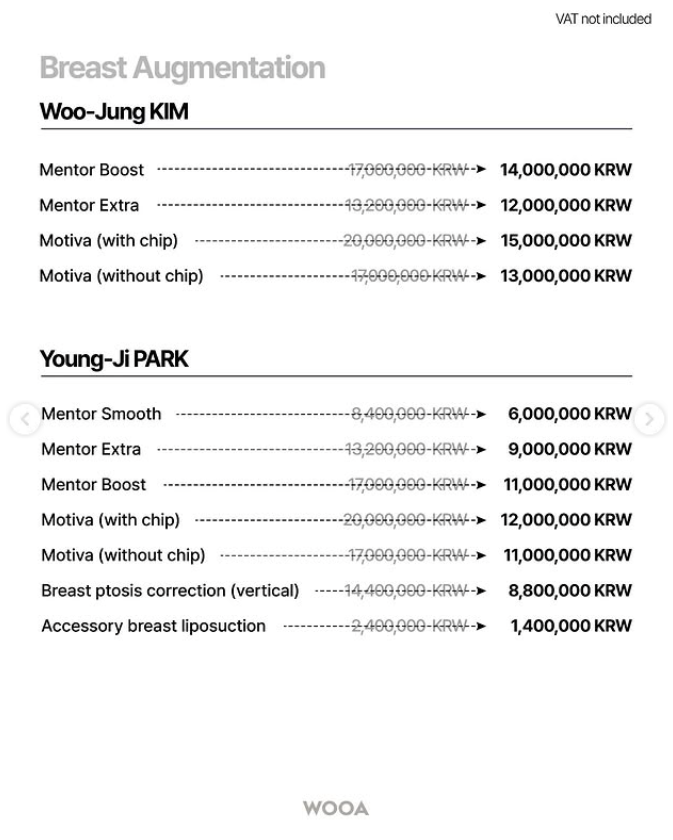
- Revision surgery: typically higher than primary augmentation
- Competitive pricing compared to US/Europe for similar expertise
Overseas:
- United States: often the highest cost overall
- Thailand: lower cost but variable revision specialization
- Europe: mid to high range depending on country
Korea often sits in a “high-value for expertise” range.
Follow-Up Care and Safety System
Postoperative care is critical in revision surgery.
Korea:
- Structured follow-up schedules
- Frequent early postoperative monitoring
- Clinics experienced with international patient management
- Quick response for early complication management
Overseas:
- Excellent care in top centers, but variability exists
- Follow-up may be limited for international patients
- Distance can make revision follow-ups difficult
Follow-up accessibility is a key consideration.
Travel and Revision Complexity for International Patients
Revision surgery often requires multiple visits.
Korea advantages:
- Compact medical hub in Seoul
- Easy access to multiple consultations
- High concentration of revision specialists
- Efficient scheduling systems for international patients
Overseas challenges:
- Travel distance for follow-ups
- Limited continuity of care if complications arise
- Higher logistical burden for repeat visits
Revision surgery benefits from proximity to the surgeon.
Risk Management and Complication Handling
Revision cases require strong complication management systems.
Korea:
- High exposure to complex revision complications
- Structured protocols for capsular contracture and malposition
- Frequent use of combination corrective techniques
Overseas:
- Excellent care in specialized centers
- Variability depending on clinic type and surgeon experience
- May require referral between specialists
Consistency in revision management is a key factor.
Which Is Better Overall?
There is no universal answer, but patterns are clear:
- Korea may be better for patients seeking natural, refined, and highly detailed revision outcomes, especially in complex asymmetry or implant positioning cases.
- Overseas may be suitable for patients prioritizing familiarity, specific surgeon preference, or certain aesthetic styles depending on region.
The best choice depends on the complexity of the revision and the level of specialization required.
Final thoughts
Korean and overseas breast revision surgery each have strong advantages, but they differ in philosophy, consistency, and specialization. Korea is widely recognized for its expertise in natural-looking correction, high-volume revision experience, and structured surgical planning. Overseas centers may offer excellent results as well, but quality can vary more depending on the individual surgeon and clinic. Ultimately, the best choice is not about geography alone, but about matching the complexity of the revision case with a surgeon who has proven, specialized experience in that specific type of correction.